

My Favourite Project (16): Paula Amaral
We often speak about how much knowledge and skills are required to work in audiovisual translation and how much effort and care we bring into our projects – but we rarely talk about the details of the process itself. At SUBTLE, we decided to change that, and give the world a peek behind the curtain.
We invited our members to tell a little bit about a project of their choice – one of the most memorable, challenging, exciting things they had a chance to work on, and what exactly made it so.
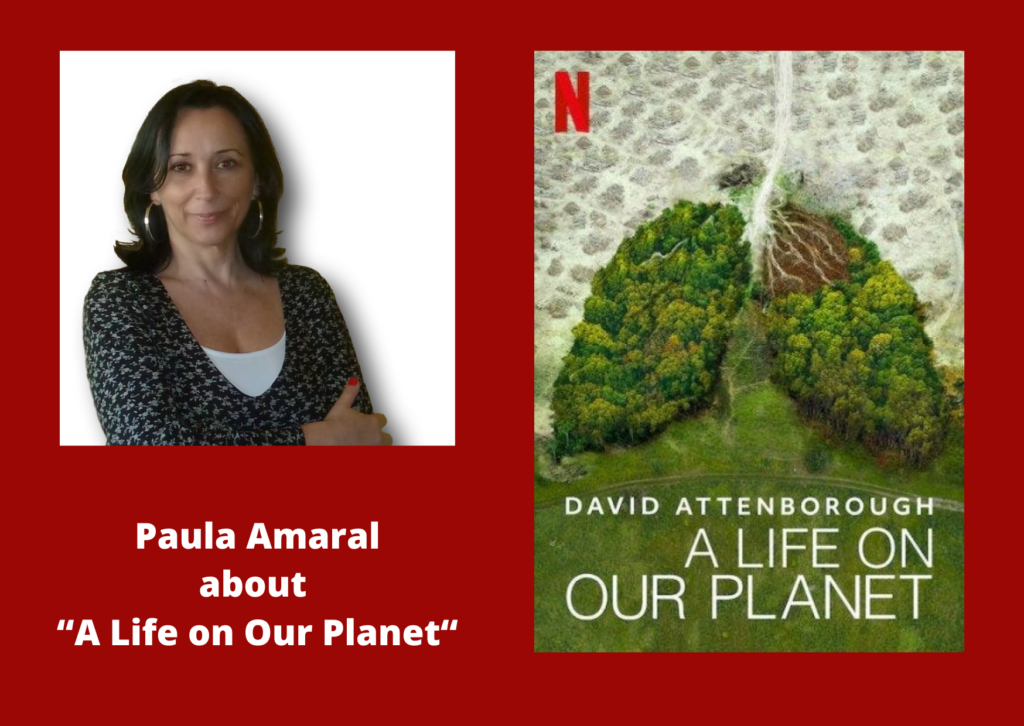
The 16h instalment of “My Favourite Project” comes from Paula Amaral, English and French into European Portuguese subtitler, who writes about her experience translating “A Life on Our Planet”. Enjoy!
I have been a fan of nature documentaries since I was a child, so getting the opportunity to translate a documentary narrated by Sir David Attenborough, A Life on Our Planet, was a dream come true.
The challenges we face when translating these kinds of projects are often quite different, not to say the opposite, from most audiovisual materials, both scripted and unscripted. In this case, there’s usually no need to condense or truncate text to avoid reading speed violations, no need to merge subtitles to borrow time. Quite the contrary. The challenge here is to avoid exceeding the maximum duration, to find the right balance between the rhythm of the dialogue and the rhythm of the subtitles, to know when to split sentences and introduce a pause, when to chain successive shorter subtitles or have a longer one, all without breaking any guidelines regarding timing to shot changes, spoilers, and the like.
From a linguistic perspective, wildlife content is bound to require extensive research to find, for instance, the equivalent common names of animals or plants, usually through their unique scientific names. However, sometimes this is not an easy task and research alone is not enough, so consulting an appropriate authority is in order.
As usual with this type of content, this documentary script is carefully and beautifully written in good English. It’s funny at times, emotional and appealing throughout.
I’ve lost count of how many times I’ve watched this feature in order to provide the best possible translation. Nevertheless, when it was released, a few months after I delivered it, I watched it once again and felt the need to ask for it to be reopened so that I could retouch a couple of things. That’s one of the challenges — and beauties — of creative translation: there is no such thing as a single correct way to do it.
This documentary touched me deeply. It made me sad, it made me mad, but it ended up showing the way and giving me hope.
See A Life on Our Planet in SubtleBase
See Paula’s profile in SUBTLE Members’ Directory